A small drip can stay hidden in a cabinet or wall until a stain, odor or warped finish appears. These visual checks cover common trouble spots in houses, condos and businesses. They help you notice moisture early; they are not a mold test or a substitute for a professional inspection.
Under kitchen and bathroom sinks
Look at the cabinet floor, back corners and the visible supply lines and drain connections. After using the faucet, check for new droplets or a damp cabinet base. Keep stored items clear long enough to notice a slow leak.
Bathrooms, tubs and laundry
Check around toilet supply connections, the toilet base, tub or shower edges, and accessible washer hoses. Peeling paint or a soft baseboard near a bathroom—or a ceiling mark below an upstairs bath—can be a clue that water is getting where it should not.
Garages and utility areas
Visually inspect accessible water-heater connections, laundry areas, exposed pipes and the wall or ceiling after heavy rain. Do not touch wet electrical equipment or enter standing water if electrical safety is uncertain.
Walls, ceilings and living spaces
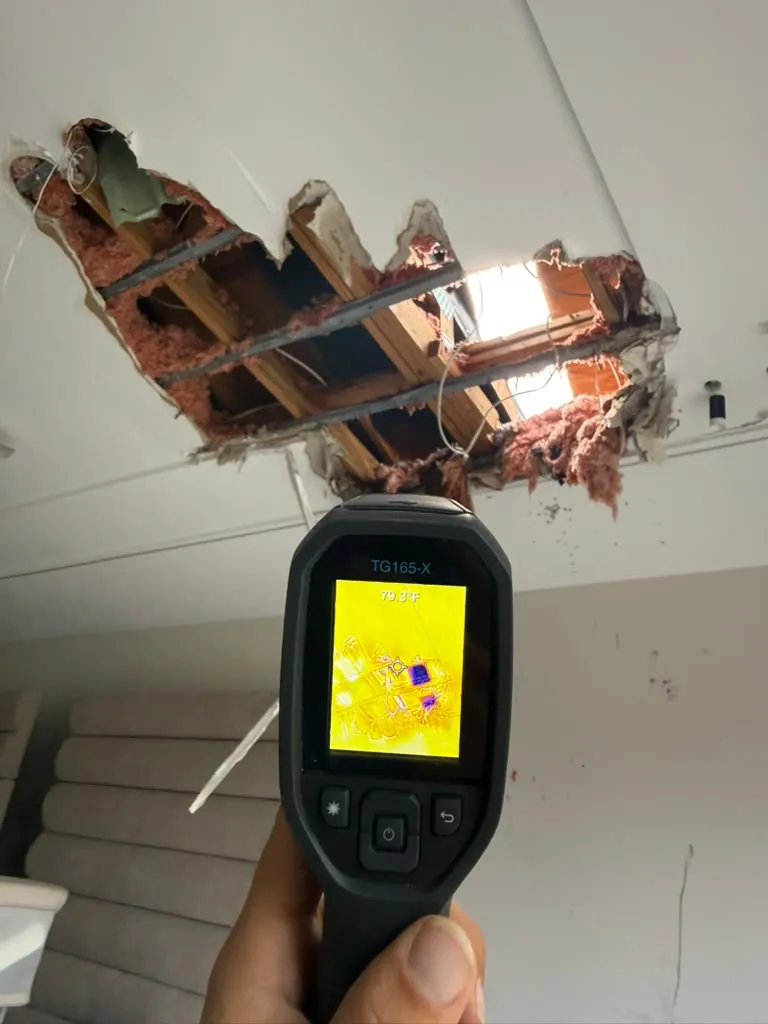
Watch for a new or spreading stain, bubbling or peeling paint, swollen trim, lifted flooring, or a persistent musty odor. These signs can indicate moisture, but they do not identify its source or prove that mold is present.
Local property considerations in Palm Beach Gardens
The local context below is not a diagnosis of any building. Make observations only from a safe, dry location; never enter floodwater or disturb suspected mold to document damage.
Water damage in Palm Beach Gardens can follow a plumbing leak, failed appliance or water heater, AC condensate overflow, roof opening or storm-related entry. Conditions vary by property and building; check the specific source and affected materials rather than assuming the same exposure across the city.
Palm Beach Gardens encompasses a variety of living environments, including both gated and non-gated communities, with structures ranging from villas to estate homes. Because of this structural diversity, water damage from an AC condensate overflow, a plumbing leak, or storm entry will manifest differently depending on the property. It is crucial for homeowners to understand that this broad housing description does not indicate the condition of their own specific property, requiring a localized approach to any restoration efforts. If you suspect water damage, please retreat to a safe and dry location before taking further action.
When water damage occurs, the initial cleanup phase depends heavily on the specific materials involved. For instance, drying a villa with specific architectural finishes may require different techniques than drying a large estate home. Documenting the entry point of the water and the specific zones where moisture has settled is vital. This information helps restoration professionals determine the most efficient structural drying approach to protect your property from the risk of secondary mold growth and material deterioration. Keep your documentation efforts focused on areas where you can safely observe the damage.
When you encounter smoke, mold, or water intrusion, your priority should be the immediate assessment of your own home’s environment. Record the sequence of events and identify whether the source was internal, such as a water heater failure, or external. Because Palm Beach Gardens contains such distinct housing styles, your documentation serves as the primary data for the restoration team. Avoid making assumptions about your home's vulnerability based on the type of community you reside in; focus instead on the physical realities of your structure. Do not perform any DIY demolition or cleaning that might expose you to hazards.
Effective remediation in this diverse landscape relies on clear communication and careful documentation. Whether you are dealing with a small leak or a more significant event, the key is to ensure the restoration plan is tailored to your home’s specific design and current condition. By prioritizing site-specific evaluations over generalized information, you can ensure that the cleanup process remains efficient, thorough, and appropriate for the unique structural needs of your residence in Palm Beach Gardens. Always consult with qualified professionals from a secure, dry position.
Verified local context
The City describes a mix of gated and non-gated communities, including villas and estate homes. This broad housing description does not establish the construction or condition of any specific property.
Source: City of Palm Beach Gardens — CommunityThis city guide is for general awareness. The visible symptom alone cannot identify a leak source, hidden damage or insurance coverage. Restoration On Demand serves properties throughout Palm Beach Gardens and nearby areas in Palm Beach County.
Service-area reference: Palm Beach County’s official municipality directory. It confirms the municipality and county, not conditions at a specific property.