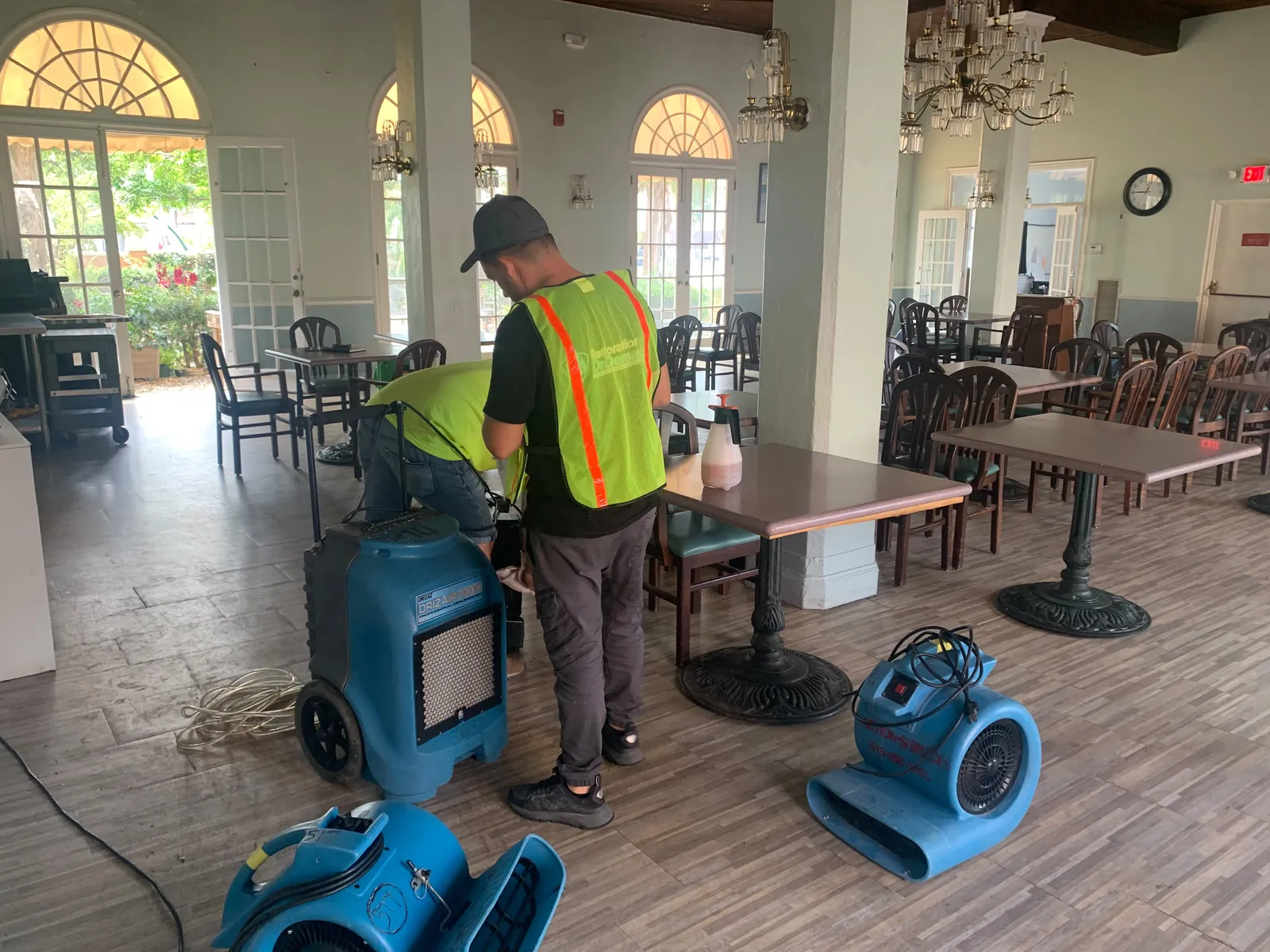
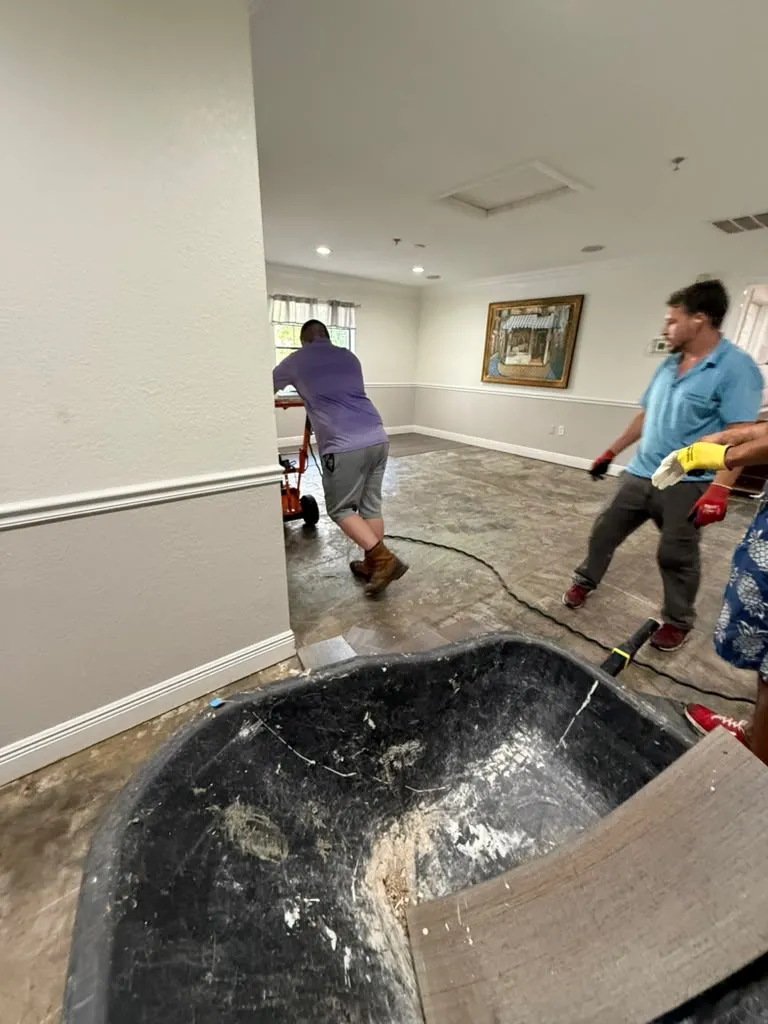
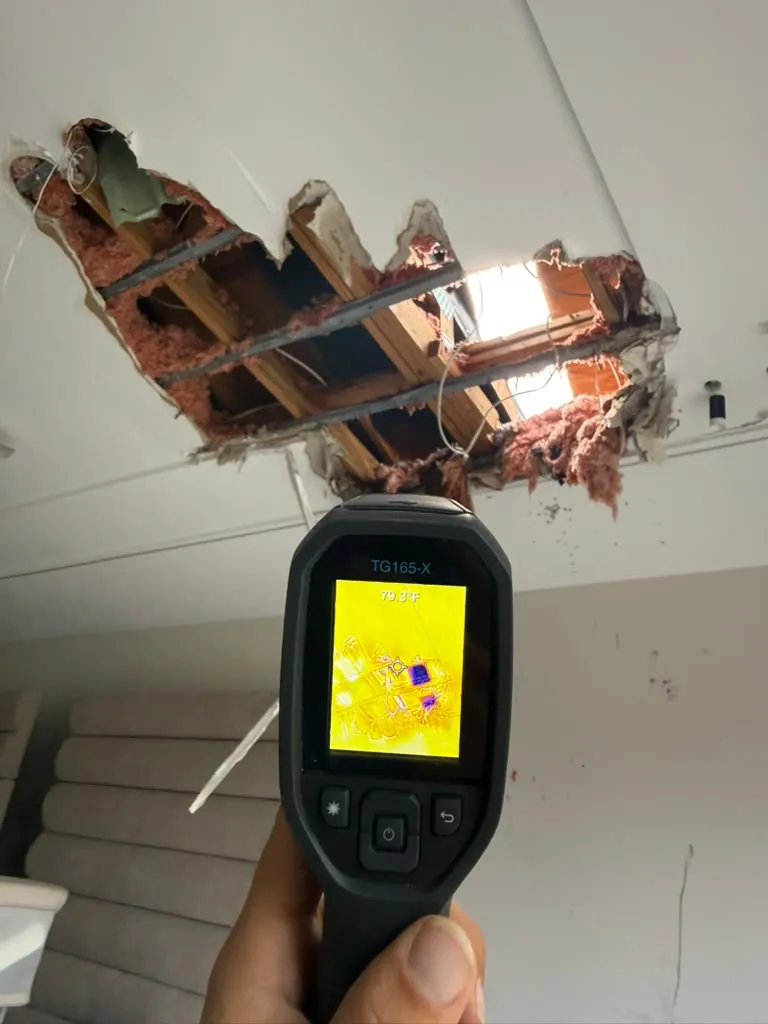
A small drip can stay hidden in a cabinet or wall until a stain, odor or warped finish appears. These visual checks cover common trouble spots in houses, condos and businesses. They help you notice moisture early; they are not a mold test or a substitute for a professional inspection.
Under kitchen and bathroom sinks
Look at the cabinet floor, back corners and the visible supply lines and drain connections. After using the faucet, check for new droplets or a damp cabinet base. Keep stored items clear long enough to notice a slow leak.
Bathrooms, tubs and laundry
Check around toilet supply connections, the toilet base, tub or shower edges, and accessible washer hoses. Peeling paint or a soft baseboard near a bathroom—or a ceiling mark below an upstairs bath—can be a clue that water is getting where it should not.
Garages and utility areas
Visually inspect accessible water-heater connections, laundry areas, exposed pipes and the wall or ceiling after heavy rain. Do not touch wet electrical equipment or enter standing water if electrical safety is uncertain.
Walls, ceilings and living spaces
Watch for a new or spreading stain, bubbling or peeling paint, swollen trim, lifted flooring, or a persistent musty odor. These signs can indicate moisture, but they do not identify its source or prove that mold is present.
Local property considerations in Glen Ridge
The local context below is not a diagnosis of any building. Make observations only from a safe, dry location; never enter floodwater or disturb suspected mold to document damage.
Water damage in Glen Ridge can follow a plumbing leak, failed appliance or water heater, AC condensate overflow, roof opening or storm-related entry. Conditions vary by property and building; check the specific source and affected materials rather than assuming the same exposure across the city.
In Glen Ridge, properties may encounter water damage due to a range of issues including plumbing leaks, failing water heaters, or storm-driven moisture. While historical context indicates the town was developed on 100 acres in the 1940s, this does not serve as a definitive baseline for the maintenance history or current material resilience of your home. You should prioritize assessing your home's unique layout and build quality when evaluating moisture intrusion issues. Understanding that your specific dwelling's history is the only relevant metric allows for more precise intervention compared to town-wide historical data. Restoration requires an evaluation of the individual building's components rather than assumptions about the era of development.
Effective drying and interior repair require accurate documentation of the affected zones. Whether you are dealing with an appliance failure or an AC condensate issue, identifying the specific materials—such as flooring or wall finishes—is more useful than relying on general town-wide development timelines. Documenting where water traveled and which areas remain damp is a vital step for homeowners to take immediately after an incident. This focused approach ensures that no structural element is overlooked while simultaneously preventing the unnecessary removal of healthy building components. Professional assessment of your property's moisture levels is recommended.
For mold or smoke-related issues, the approach to cleaning should be strictly customized to your property. Since Glen Ridge development occurred in phases during the 1940s, structural elements and wall cavity configurations can vary significantly from one residence to another. A tailored approach ensures that drying equipment is placed correctly to address your specific home's drying requirements without compromising unexposed areas. This avoids the common trap of applying a uniform solution to what is essentially a series of distinct building environments. Focus on the physical evidence within your walls to determine the appropriate scope of work.
Safe access is paramount during the cleanup phase. If you have experienced a significant water event, assess the structural stability of the immediate area before proceeding with cleanup efforts. Sharing information about your home's specific plumbing or HVAC configuration helps professionals focus their efforts on your actual property needs. Always treat the specific evidence within your four walls as the primary factor for decision-making rather than town-level historical data. By prioritizing your own residence's needs, you ensure a thorough recovery that addresses the underlying causes of moisture. Proper documentation from a safe, dry location is the first step in successful recovery.
Verified local context
The Historical Society of Palm Beach County describes Glen Ridge as a primarily residential town developed on 100 acres in the 1940s. This is historical context and not an age or condition claim about any individual property.
Source: Historical Society of Palm Beach County — Glen RidgeThis city guide is for general awareness. The visible symptom alone cannot identify a leak source, hidden damage or insurance coverage. Restoration On Demand serves properties throughout Glen Ridge and nearby areas in Palm Beach County.
Service-area reference: Palm Beach County’s official municipality directory. It confirms the municipality and county, not conditions at a specific property.