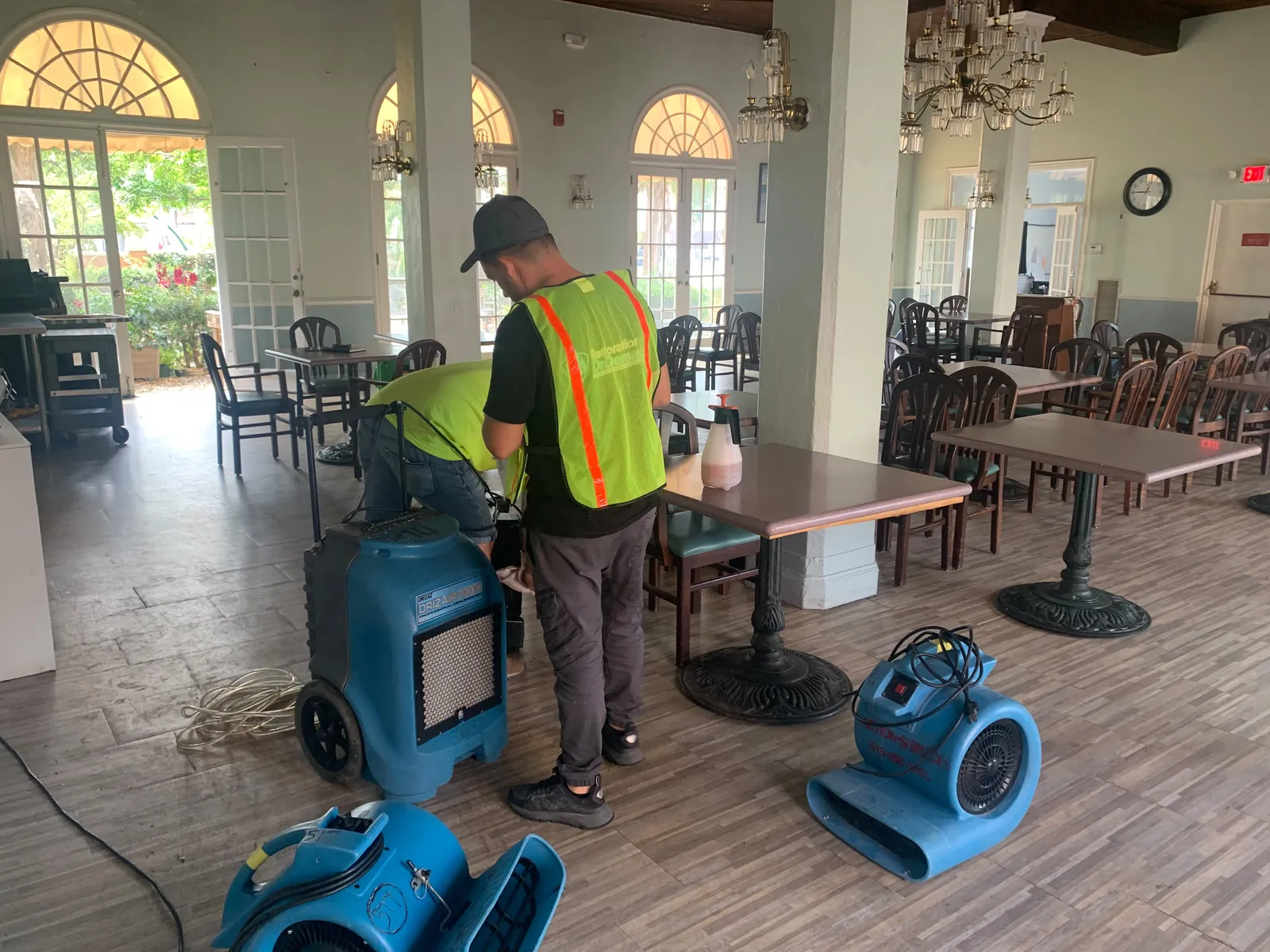
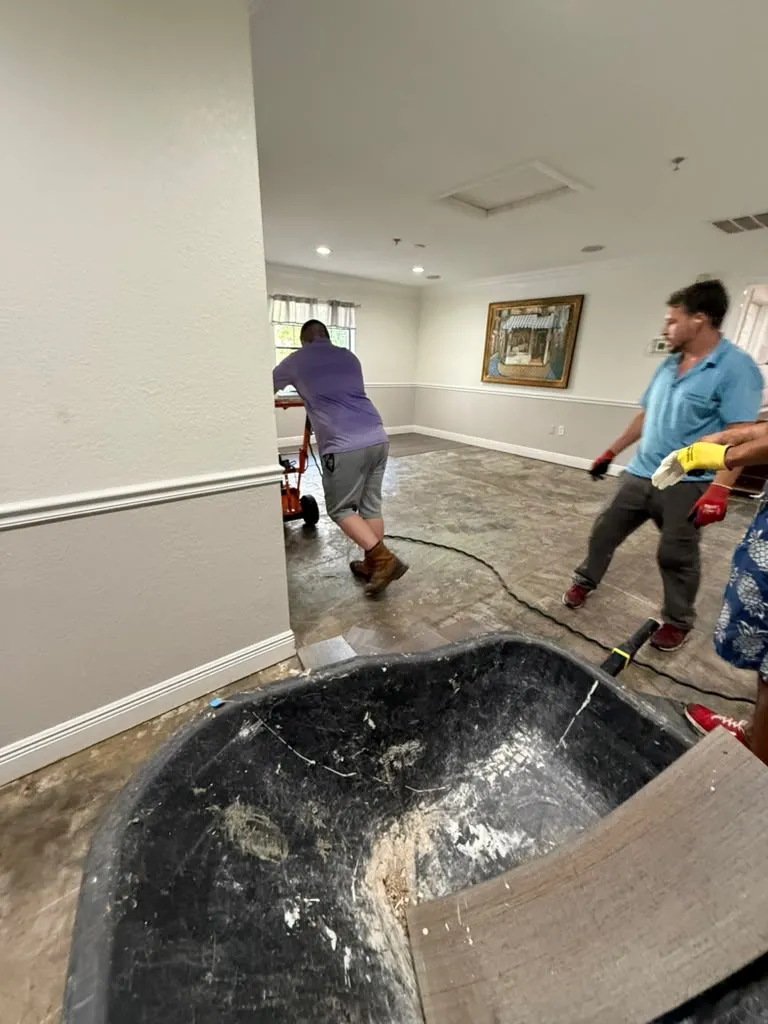
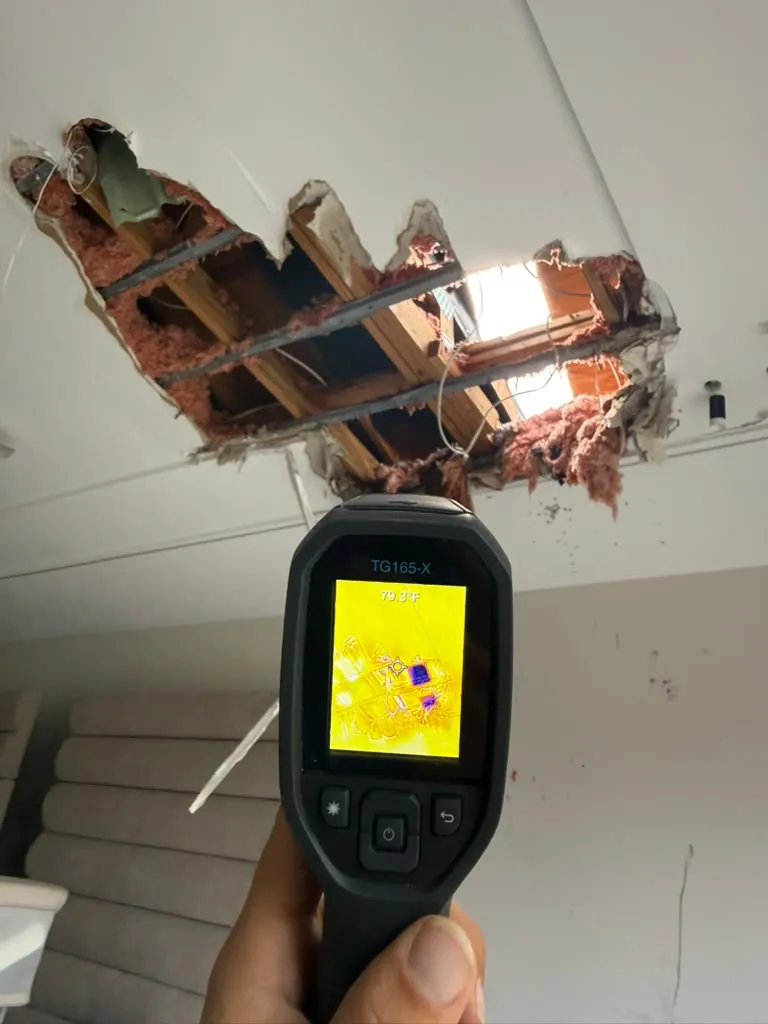
A small drip can stay hidden in a cabinet or wall until a stain, odor or warped finish appears. These visual checks cover common trouble spots in houses, condos and businesses. They help you notice moisture early; they are not a mold test or a substitute for a professional inspection.
Under kitchen and bathroom sinks
Look at the cabinet floor, back corners and the visible supply lines and drain connections. After using the faucet, check for new droplets or a damp cabinet base. Keep stored items clear long enough to notice a slow leak.
Bathrooms, tubs and laundry
Check around toilet supply connections, the toilet base, tub or shower edges, and accessible washer hoses. Peeling paint or a soft baseboard near a bathroom—or a ceiling mark below an upstairs bath—can be a clue that water is getting where it should not.
Garages and utility areas
Visually inspect accessible water-heater connections, laundry areas, exposed pipes and the wall or ceiling after heavy rain. Do not touch wet electrical equipment or enter standing water if electrical safety is uncertain.
Walls, ceilings and living spaces
Watch for a new or spreading stain, bubbling or peeling paint, swollen trim, lifted flooring, or a persistent musty odor. These signs can indicate moisture, but they do not identify its source or prove that mold is present.
Local property considerations in Jupiter Inlet Colony
The local context below is not a diagnosis of any building. Make observations only from a safe, dry location; never enter floodwater or disturb suspected mold to document damage.
Water damage in Jupiter Inlet Colony can follow a plumbing leak, failed appliance or water heater, AC condensate overflow, roof opening or storm-related entry. Conditions vary by property and building; check the specific source and affected materials rather than assuming the same exposure across the city.
Jupiter Inlet Colony experiences a range of potential water damage scenarios, from appliance failures to roof openings during severe weather. Because every home is distinct, your response should begin with a direct inspection of the affected area. Avoid relying on neighborhood-wide assumptions, as even homes in close proximity may feature different internal layouts, finishes, and material sensitivities to moisture. Establishing the exact point of entry for water or the precise source of smoke is the first step in effective mitigation. Conditions vary by property and building; check the specific source and affected materials rather than assuming the same exposure across the city.
When documenting the damage for a potential restoration, focus your attention on the materials that have clearly been compromised. If a plumbing leak or AC condensate issue has occurred, identify whether the moisture is contained or if it has entered wall cavities or subflooring. Proper documentation involves recording these specific paths, which is critical for professionals tasked with structural drying. Keeping a clear record of the affected items ensures that interior repair efforts are targeted and efficient. Always ensure you are working from a safe, dry location when recording your observations to prevent exposure to potential hazards.
Safety and access are paramount when dealing with water damage. Keep traffic away from areas where materials have become saturated or unstable. If you need to enter an area to document damage, ensure the structural integrity has not been compromised by the water intrusion. Professional drying operations require precise information regarding where the water pooled and how long it remained in contact with building materials, as this data dictates the necessary cleaning and drying equipment to be deployed. Relying on professional guidance helps manage the moisture effectively while maintaining a safe environment for everyone in the home.
While municipal reports like the Palm Beach County permit activity list a specific count of residential units for Jupiter Inlet Colony, these administrative figures provide no information about the age, layout, or structural condition of your individual home. Do not look to these permit numbers to guide your cleanup efforts or to evaluate the condition of your home's structural systems. Instead, focus entirely on the physical evidence found within your own residence to determine the most appropriate course of action for your water or smoke damage remediation project. Site-specific facts are the only reliable basis for planning your restoration.
Verified local context
Palm Beach County’s first- and second-quarter 2025 permit reports list three single-family residential units and no multi-family units for Jupiter Inlet Colony. These are reported permit-period figures, not a count or description of the existing housing stock.
Source: Palm Beach County — Permit Activity ReportsThis city guide is for general awareness. The visible symptom alone cannot identify a leak source, hidden damage or insurance coverage. Restoration On Demand serves properties throughout Jupiter Inlet Colony and nearby areas in Palm Beach County.
Service-area reference: Palm Beach County’s official municipality directory. It confirms the municipality and county, not conditions at a specific property.