A small drip can stay hidden in a cabinet or wall until a stain, odor or warped finish appears. These visual checks cover common trouble spots in houses, condos and businesses. They help you notice moisture early; they are not a mold test or a substitute for a professional inspection.
Under kitchen and bathroom sinks
Look at the cabinet floor, back corners and the visible supply lines and drain connections. After using the faucet, check for new droplets or a damp cabinet base. Keep stored items clear long enough to notice a slow leak.
Bathrooms, tubs and laundry
Check around toilet supply connections, the toilet base, tub or shower edges, and accessible washer hoses. Peeling paint or a soft baseboard near a bathroom—or a ceiling mark below an upstairs bath—can be a clue that water is getting where it should not.
Garages and utility areas
Visually inspect accessible water-heater connections, laundry areas, exposed pipes and the wall or ceiling after heavy rain. Do not touch wet electrical equipment or enter standing water if electrical safety is uncertain.
Walls, ceilings and living spaces
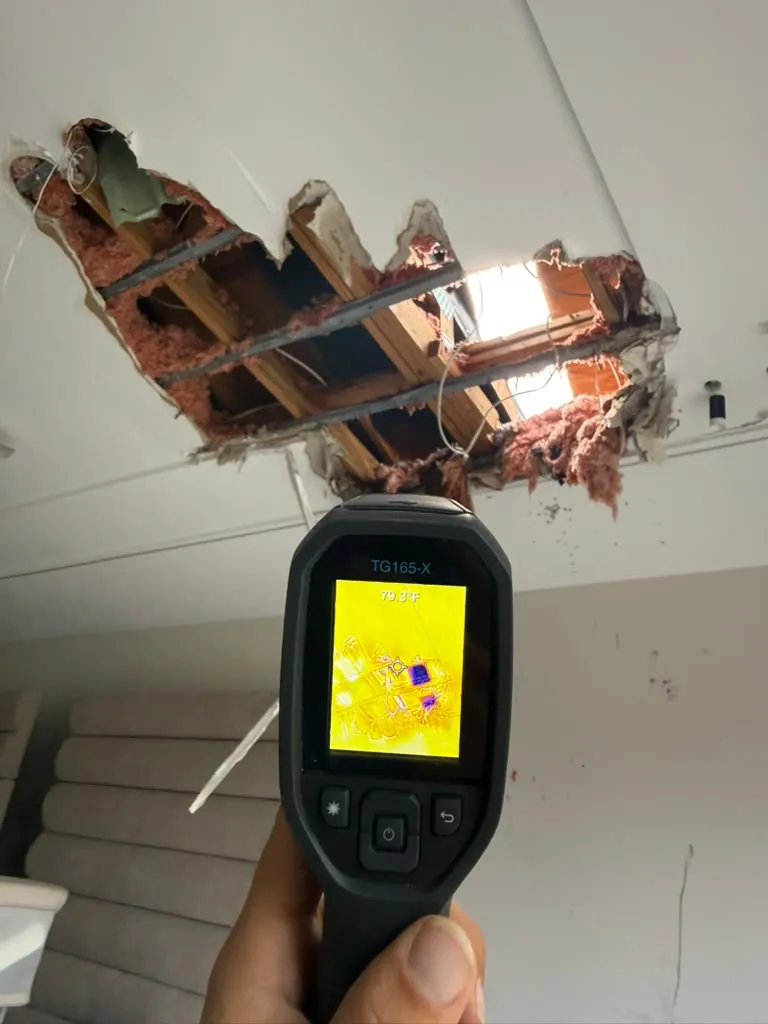
Watch for a new or spreading stain, bubbling or peeling paint, swollen trim, lifted flooring, or a persistent musty odor. These signs can indicate moisture, but they do not identify its source or prove that mold is present.
Local property considerations in Hallandale Beach
The local context below is not a diagnosis of any building. Make observations only from a safe, dry location; never enter floodwater or disturb suspected mold to document damage.
In tall buildings a failed supply line or AC drain can wet several floors, and high humidity near the ocean accelerates mold behind wet drywall.
Hallandale Beach is dense with high-rise condos and a handful of low-rise neighborhoods, such as Golden Isles and Three Islands. The city faces property challenges related to its density and coastal environment. In tall buildings along the Hallandale Beach Boulevard corridor, a failed supply line or an air conditioning drain clog can affect several floors in a short period. Cleanup in these high-rise environments requires a coordinated approach that addresses not only the individual unit but also the common areas and adjacent properties that may have been impacted by the downward flow of water.
The proximity to the ocean creates a climate where high humidity is the norm, which can influence conditions behind wet drywall. In a high-rise setting, this is important to consider because trapped moisture can stay hidden in partition walls for extended periods. When seeking assistance, homeowners should request a moisture assessment that specifically checks for humidity levels within the wall cavities. This is essential because the coastal air, combined with indoor moisture, can turn minor leaks into significant remediation projects if not addressed with appropriate drying equipment.
For those in low-rise neighborhoods, the risk profile changes, but the need for documentation remains high. Whether in a high-rise or a single-family home, the key is to isolate the source of the water quickly. If a supply line fails, clear documentation of the pipe location and the extent of the spread helps the cleanup crew determine if the damage is contained or if it has moved through utility shafts. Effective documentation includes photographing the source of the leak, the path of the water, and the affected materials before any structural drying commences.
Recovery in Hallandale Beach requires an understanding of how coastal air and vertical construction interact. During the interior repair phase, it is useful to choose materials that are suited to a high-humidity environment. Ensuring that any water mitigation effort includes the proper disposal of saturated porous materials is standard procedure to address dampness. By focusing on rapid moisture removal and utilizing advanced dehumidification techniques, residents can better preserve the structural integrity of their high-rise units against the persistent coastal climate of the area.
This city guide is for general awareness. The visible symptom alone cannot identify a leak source, hidden damage or insurance coverage. Restoration On Demand serves Golden Isles, Three Islands, Hallandale Beach Boulevard and nearby areas in Broward County.
Service-area reference: Broward County’s official municipality directory. It confirms the municipality and county, not conditions at a specific property.